By Bsant Mohamed
Baltimore seems to have escaped a second blizzard, while people in New York are dealing with 2 feet of snow after dealing with the first blizzard we got this year, let’s look back on the first big snow storm Baltimore has had in the last decade. Just weeks ago, heavy snowfall made sidewalks unwalkable, turning roads that were two lanes into a one lane street, and shut down schools across the state, leaving students home for a week.
It had been known that there would be a huge winter storm arising the second to last week of January. The winter storm was planned to hit a lot of states on the Southwest to the Northeast coast, such as North Carolina, South Carolina, Texas, New York, Maryland, and others. As the days got closer and closer to the winter storms, people raided grocery stores, buying 12 cartons of eggs, 7 bags of bread and all they could get and need to hibernate during and after the storm–almost like how people reacted to going into quarantine during the 2020 covid pandemic.
“The Thursday before the storm, my mother and I went to prepare for the storm and we saw people’s carts filled to the top with eggs and milk,” said an anonymous 9th grade student. “Some people even had 2 carts filled with food and stuff,” they continued.
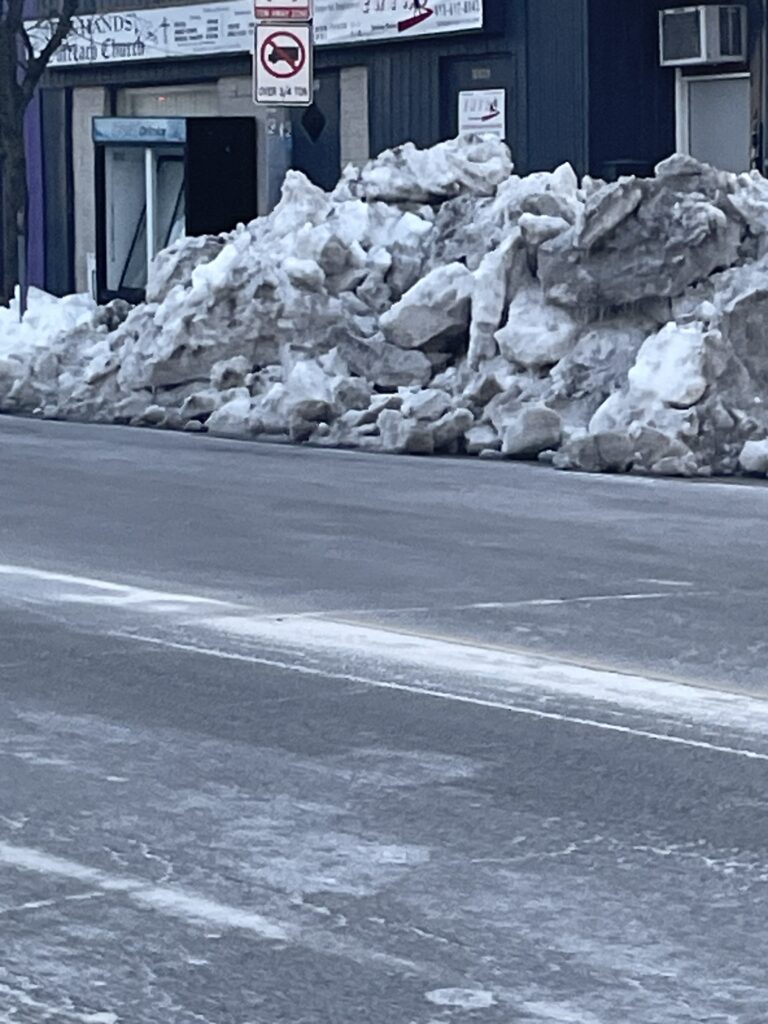
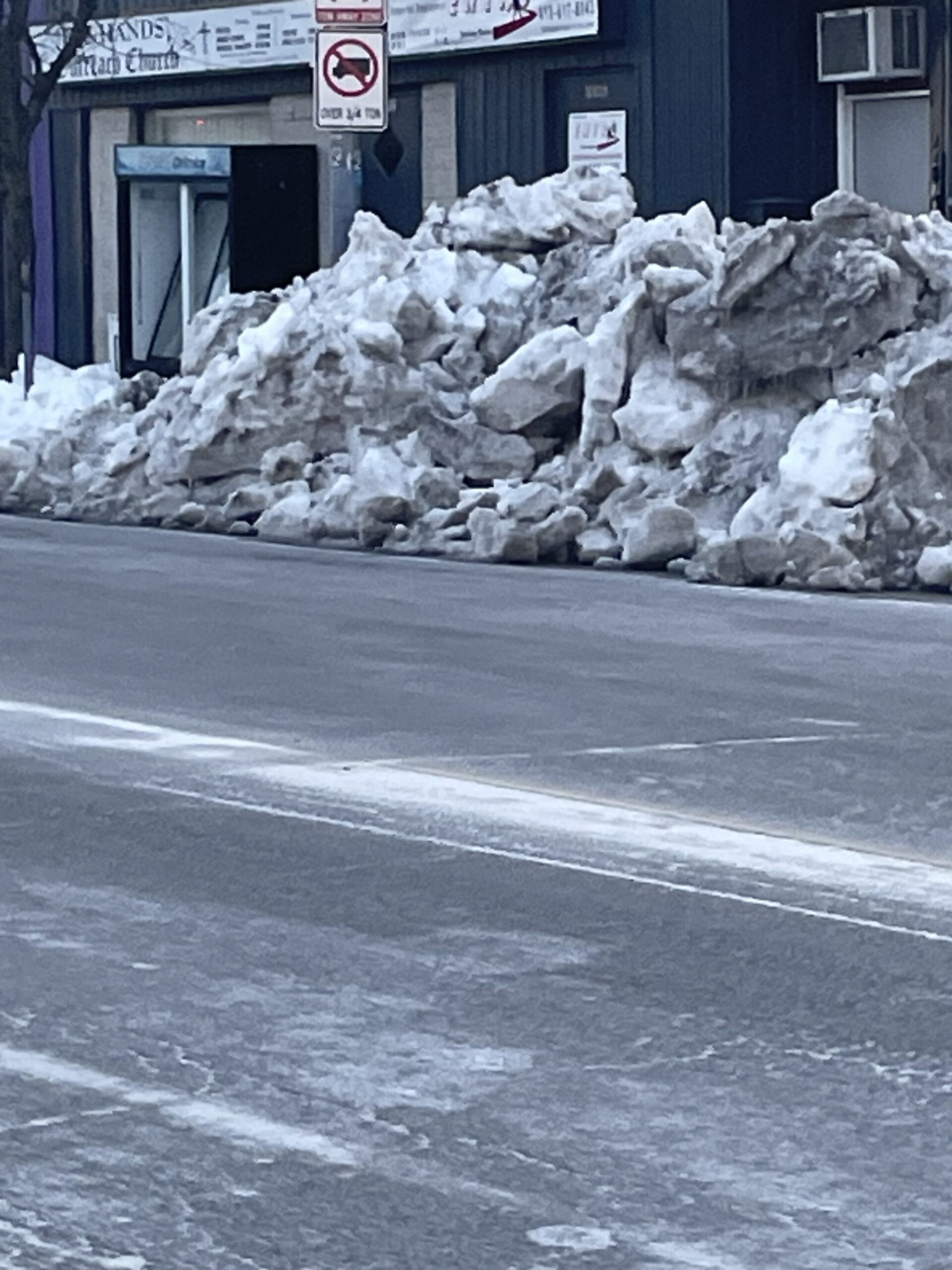
When the storm hit on Sunday January 25th, Maryland got about 6-10 inches of snow, making all of Baltimore and other cities a winter wonderland. Baltimore City Public Schools made a post on their instagram page before the snow that there will only be 3 days of school closed if we were to get an insane amount of snow. Monday, Tuesday, and Wednesday got canceled due to the huge amount of snow not melting–and instead, the snow was turning into concrete ice. The sidewalks were unwalkable due to the concrete ice and the snow–even though the roads were somewhat cleared up–was still affecting roads because there are cars parked in the middle of the roads because the lanes where cars usually can park got covered and piled with snow.
As BCPSS realized how bad the snow was during that week, they decided to cancel school for the entire week and on Thursday and Friday, all schools were doing virtual learning. It took 2 to 3 full weeks for the snow to melt off of the sidewalks or bus stops, which caused a huge outrage for students and staff as to how they traveled to school on that Monday. On February 2nd, buses and light rails were either not working or had a delay which caused a lot of people to come to school late. A 12th grade student at the Baltimore Polytechnic Institute, who takes the light rail almost everyday on her way to school had to say this, “I got off the light rail and the entire sidewalk to school was not walkable,” they said. “Students were walking on the road to get to school, but my parents did not want me to walk on the road, so I had to miss school as the conditions to get to school were unsafe.”
Another student who drove to school said, “I usually drive to school, but the parking lot where I usually park my car was covered fully in snow,” she said. “I had to turn my car back around and go home, the streets were already terrible as they were that day, so just seeing that amount of snow covering the parking lot I use, it just frustrated me, I did not want to deal with that,” she complained. The number of people who came to school on Monday, February 2nd, were 1488 students out of 1656 students, according to the attendance day count report–meaning 168 were absent that day.
“Those who make these decisions are not taking student safety into consideration,” said Ms. Torres on one of BCPS’s instagram posts. “Please help us prioritize student safety! They should not be walking on the street, especially on Cold Spring coming from the light rail,” she continued.
Our journalism staff reached out to the Baltimore City Public School District staff about the “snow concrete” that was making transportation inflexible for students. They reached out to Matthew Garbark, Director of Baltimore DPW, Issaac Schleifer, a representative from the Baltimore City Government, Governor Wes Moore, and many more important people to get answers to this matter, but to this day, we have received little to no response from anyone.
Alice Bahr, one of our journalism staff, reached out to Mark Parker, a Baltimore CIty Council Representative for the District, sharing how the city counsel is involved in weather inclement decisions and assistance during snow emergencies. “Generally such a topic would be handled in an oversight hearing in a committee… in this case, probably the Land Use & Transportation committee, on which I serve — because the snow response is mostly the responsibility of the Department of Transportation, and they report to that committee… We don’t write or vote to approve a general winter storm official plan, nor are we making decisions in real time about the response — that is up to the Mayor’s team and city agency leadership. But we are a close conversation partner with them as they make those decisions and respond to the unfolding crisis.”
While winter storms and the amount of snow we get is always unpredictable in this midatlantic area, the lack of preparation and communication should not be. Students should not have to risk walking on the roads to get to school, nor should families have to choose between safety or school attendance. Moving forward, school officials should work harder and improve on their communication with city agencies and communities to ensure clear sidewalks, bus stops, and school parking lots before reopening schools. School officials should also take into consideration student safety before making decisions to send kids to school when they haven’t finished their jobs in making it safe to even step foot out of the house or onto a road.